Background: Medication dosing errors in pediatrics are a common occurrence. Dosing errors are the result of multiple causes: infrequent exposure to pediatric patients coupled with complex calculations for weight-based dosing performed in a stressful environment. The NAEMSP Pediatrics Committee undertook a scoping review of EMS, interfacility and emergency literature to develop a series of evidence-based recommendations to reduce the incidence of pediatric medication errors in the prehospital environment.
Methods: The authors identified four key concepts areas to review:
1. What is known about enhanced dosing safety for patients in the EMS setting?
2. What are the greatest latent and active safety threats to medication dosing?
3. Can dosing safety education and strategies from other settings be adapted to the EMS setting?
4. What is known about the role of standardized formularies in dosing safety? Is a standardized formulary protocol a means for precalculation of doses and decreasing errors? Are drug shortages and concerns for medical director autonomy barriers to standardization of formularies?
From these 4 concept areas, 17 PICO (Population-Intervention-Control-Outcome) Questions were iteratively developed and used as a basis for a subsequent literature search. 70 research articles were ultimately included in the qualitative synthesis which extracted relevant findings of the study and also graded the strength of evidence using a standardized rubric. The summary of this data was then used to draft evidence-based recommendations for pediatric EMS medication dosing safety.
Results: Overall, 70 articles on pediatric dosing safety were included. There was a paucity of EMS-specific research pertinent to medication safety. Data from hospital-based studies required extrapolation to EMS. Using the information contained in these articles, the authors make the following recommendations:
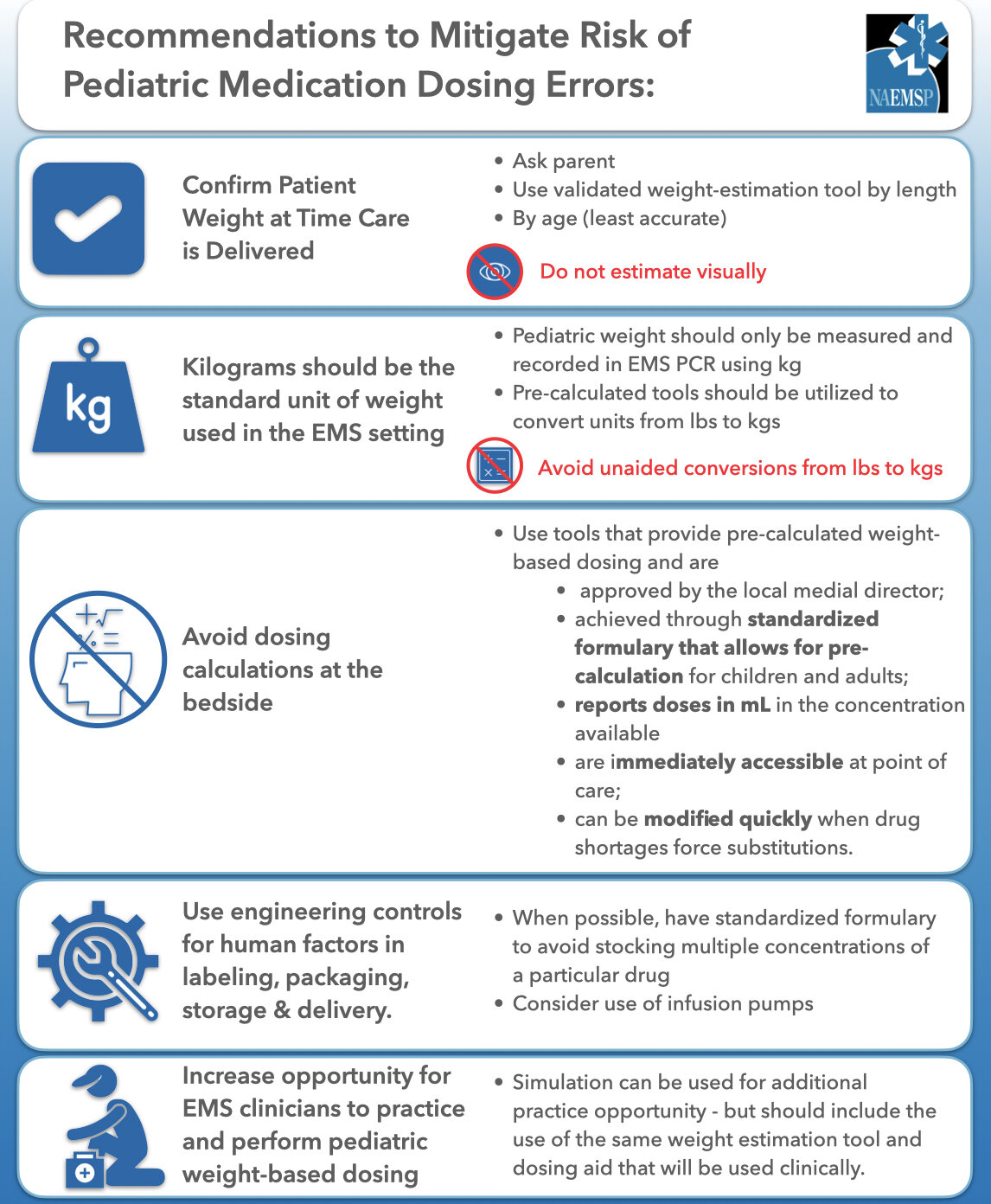
Take home for EMS: Pediatric medication dosing errors are common in EMS. Incorporating the above recommendations may help decrease this risk.
Article Bites summary by Maia Dorsett, MD PhD FAEMS FACEP, @maiadorsett