
Category: Uncategorized

Article Bites #24: More than a Moment in Time: The Association between Out-of-Hospital Hypoxia and Hypotension on Traumatic Brain Injury

Article:  Spaite DW, Hu C, Bobrow BJ, Chikani V, Barnhart B, Gaither JB, et al.The effect of combined out-of-hospital hypotension and hypoxia on mortality in major traumatic brain injury. Ann Emerg Med 2017 Jan;69(1):62-72. Background:  Hypoxia and hypotension are known to independently increase mortality in patients with severe traumatic brain injury, but their combined effects

Read More »

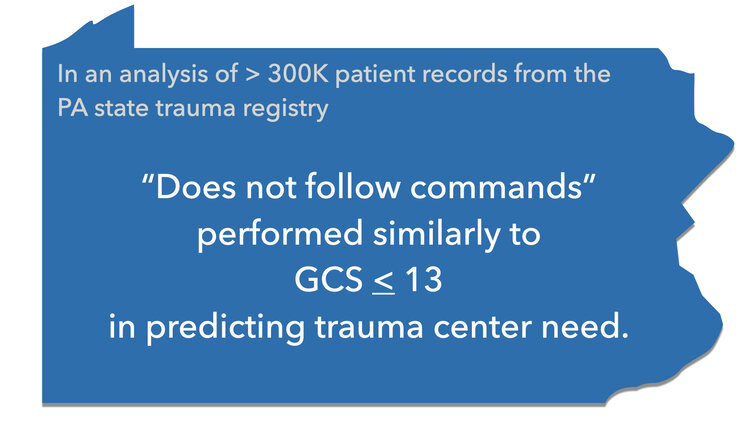
Article Bites #23: Applying the K.I.S.S. Principle to Trauma Triage.

Article: Kupas, D. F., Melnychuk, E. M., & Young, A. J. (2016). Glasgow coma scale motor component (“patient does not follow commands”) performs similarly to total glasgow coma scale in predicting severe injury in trauma patients. Annals of emergency medicine, 68(6), 744-750.  Background: Trauma patients are often triaged to trauma centers based on their GCS.  Indeed, a

Read More »

Article Bites #22:  Moving Beyond First Pass Success: A Clinical Bundle to Reduce the Incidence of Out-of-Hospital Peri-Intubation Hypoxia.

Article:  Jarvis, J. L., Gonzales, J., Johns, D., & Sager, L. (2018). Implementation of a clinical bundle to reduce out-of-hospital peri-intubation hypoxia. Annals of Emergency Medicine, 72(3), 272-279.  Background:  Peri-intubation hypoxia is an important quality measure for EMS agencies performing rapid sequence intubation, as it is associated with poor patient outcomes including peri-intubation cardiac arrest and death

Read More »

Article Bites #21: Spinal Motion Restriction in Trauma: A Joint Position Statement

Article: Peter E. Fischer, Debra G. Perina, Theodore R. Delbridge, Mary E. Fallat, Jeffrey P. Salomone, Jimm Dodd, Eileen M. Bulger & Mark L. Gestring (2018) Spinal Motion Restriction in the Trauma Patient – A Joint Position Statement, Prehospital Emergency Care, 22:6, 659-661, DOI: 10.1080/10903127.2018.1481476 Podcast on this position statement: https://pecpodcast.libsyn.com/prehospital-emergency-care-podcast-24 Background:  Immobilization of a

Read More »

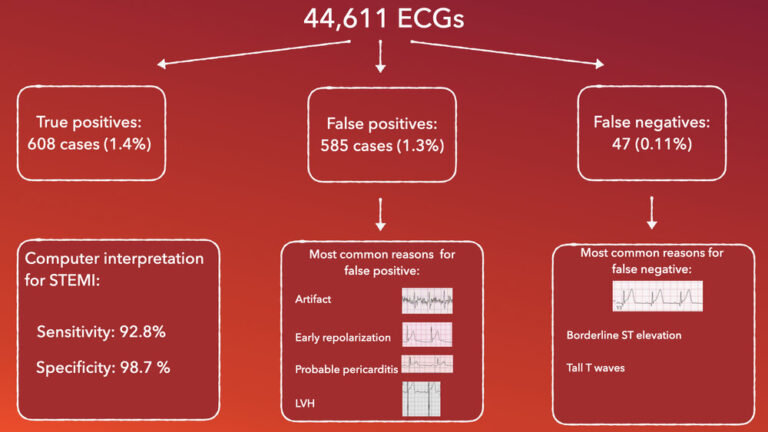
Article Bites #20: Computers as adjuncts to Humans: Causes of Prehospital misinterpretation of STEMI

Article:  Bosson, N., Sanko, S., Stickney, R. E., Niemann, J., French, W. J., Jollis, J. G., … & Koenig, W. (2017). Causes of prehospital misinterpretations of ST elevation myocardial infarction. Prehospital Emergency Care, 21(3), 283-290.  Background:   Prehospital STEMI identification plays a critical role in ensuring appropriate destination decision and shortening times to reperfusion for patients with acute

Read More »

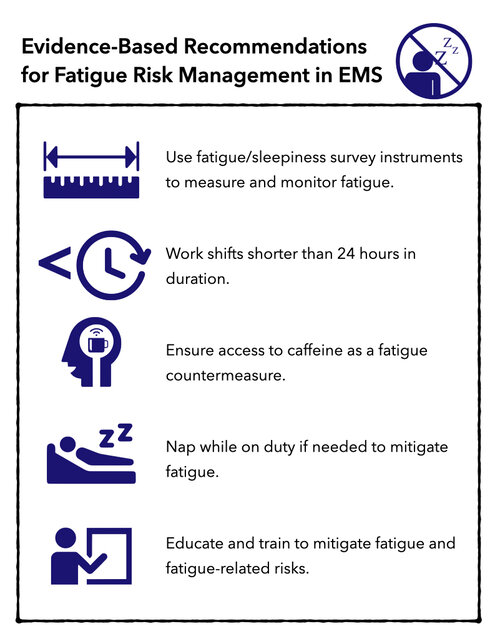
Article Bites #19: Evidence Based Guidelines for Fatigue Risk Management

Article: Patterson PD, Higgins JS, Van Dongen HPA, Buysse DJ, Thackery RW, Kupas DF, et al. Evidence-based guidelines for fatigue risk management in emergency medical services. Prehosp Emerg Care 2018 Feb;22(sup1):89-101. Background: There is not a large amount of evidence in the EMS literature that guides how to mitigate workplace fatigue, which affects over half of

Read More »

COVID-19 Pandemic: Expect the Unexpected

by Aaron Farney, MD Case Presentation EMS is dispatched priority 1 for an 86-year-old female unconscious/fainting call.  Despite 911 center implementation of the Medical Priority Dispatch System (MPDS) 36 pandemic card, this incident is coded via the 31 card – unconscious/fainting. On arrival, EMS discovers family in an upstairs bathroom surrounding an elderly female who

Read More »

The Post Naloxone Patient: Optimizing Opioid Overdose Refusals

by Brent Olson, NRP & Hashim Zaidi, MD Clinical Scenario You answer a call for on-line medical control for a 28-year-old male patient refusing transport to the hospital. The paramedics report that he was initially cyanotic with pinpoint pupils and snoring, shallow respirations. The paramedics administered a single dose of 2 mg intranasal naloxone. The

Read More »

Article Bites #18: Trauma triage of older adults: Anticoagulants Matter.

Article Bites Summary by Clare Wallner MD Infographic by Jeffrey Stirling MSc(c), PCP, @jeffrey_stirlin Article: Sacramento County Prehospital Research Consortium. Out-of-hospital triage of older adults with head injury: a retrospective study of the effect of adding “anticoagulation or antiplatelet medication use” as a criterion. Ann Emerg Med 2017 Aug;70(2):127-38. Background and objectives: The CDC Field trauma triage

Read More »
Scroll to Top