
Category: Uncategorized

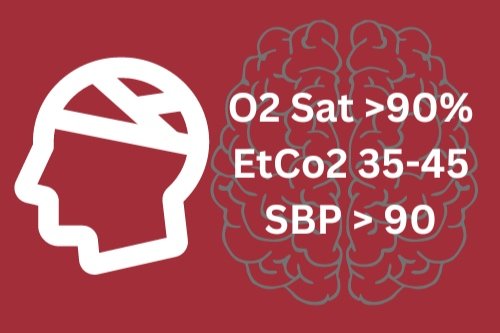
Article Bites #42: Association of Statewide Implementation of the Prehospital Traumatic Brain Injury Treatment Guidelines with Patient Survival Following Traumatic Brain Injury

Article Summary by James Li, MD Article: Spaite, D. W., Bobrow, B. J., Keim, S. M., Barnhart, B., Chikani, V., Gaither, J. B., … & Hu, C. (2019). Association of statewide implementation of the prehospital traumatic brain injury treatment guidelines with patient survival following traumatic brain injury: the excellence in prehospital injury care (EPIC) study.

Read More »

Should Waveform Capnography be in the EMT Scope of Practice? (Part 3)

What’s the Big Picture? By Adrien Quant LP,  Hashim Q. Zaidi MD As discussed in Part 1 and Part 2, current EMT standards of lung auscultation and pulse oximetry have critical limitations in the evaluation of ventilation and perfusion (Brown et al., 1997; DeMeulenaere 2007; Chan et al., 2013). However, the introduction of waveform capnography

Read More »

Should Waveform Capnography be in the EMT Scope of Practice? (Part 2)

The Benefits of Waveform Capnography for Patient Care By Adrien Quant LP, Hashim Q. Zaidi MD As discussed in Part 1, under the National EMS Scope of Practice Model (2019), EMTs are expected to initiate several critical airway and breathing interventions for a variety of medical and traumatic conditions. However, in order to evaluate ventilation

Read More »

Should Waveform Capnography be in the EMT Scope of Practice? (Part 1)

The Limitations of Lung Auscultation and Pulse Oximetry By Adrien Quant LP,  Hashim Q. Zaidi MD “Depending on a patient’s needs and/or system resources, EMTs are sometimes the highest level of care a patient will receive during an ambulance transport” National EMS Scope of Practice Model (2019) Under the National EMS Scope of Practice Model

Read More »

Addressing the Greatest Harm: Diagnostic Safety in EMS

by Maia Dorsett, MD PhD FAEMS When we teach about patient safety and medical errors, we put up pictures of the Swiss cheese model (1, 2) and demonstrate how harm occurs as errors fall through serial holes of imperfect systems.  When I examine this model, in many ways it rings true for the examples it

Read More »

Field Management and Recognition of Hyperkalemia

By Kenneth Dumas MD, Johnathon Elkes MD, Rachel Semmons MD THE CASE 78 year old male with a past medical history of COPD, DMII, HTN, and ESRD currently on hemodialysis calls 911 for complaints of shortness of breath not relieved by his home inhaler. On arrival, the patient is seated on his couch with notable

Read More »

Error reduction starts with putting down the hammer

by Clayton Kazan, MD We live in a scary time in the practice of medicine, though I am not sure that there has been a time in which medicine was relatively un-challenged.  We make a lot of errors, and those errors hurt a lot of people.  It’s as true in EMS as anywhere else in

Read More »

Article Bites #40: Comparative Effectiveness of Analgesics to Reduce Acute Pain in the Prehospital Setting

Article Summary by Emerson Franke, MD, EMT, FAAEM, (@EmersonFrankeMD) Article: Sobieraj, D. M., Martinez, B. K., Miao, B., Cicero, M. X., Kamin, R. A., Hernandez, A. V., … & Baker, W. L. (2020). Comparative effectiveness of analgesics to reduce acute pain in the prehospital setting. Prehospital Emergency Care, 24(2), 163-174. Background: Pain control in the prehospital setting

Read More »
Scroll to Top